



GUIDE
Dynamic Pricing for Golf Courses
What is dynamic pricing in golf?
Twilight hours, weekday pricing, etc. are all forms of dynamic pricing, but that's just scratching the surface.
Dynamic pricing is a pricing strategy where tee time prices change based on demand instead of remaining fixed.
Rather than charging the same rate for every tee time, courses adjust prices depending on factors like:
- Day of the week
- Time of day
- Historical demand
- Seasonality
- Booking pace
This allows operators to align pricing with real market demand.
Why Fixed Pricing Leaves Revenue Behind
Many golf courses still rely on static rate cards that charge the same price for every tee time within a category.
For example:
- Weekend morning rate
- Afternoon rate
- Twilight rate
But demand within those windows often varies dramatically. A Saturday 8:00 AM tee time may be far more valuable than a 1:30 PM slot.
Dynamic pricing allows courses to capture that value.

Reactive vs. Predictive Pricing
Some tee sheet systems or golf pricing solutions include rule-based dynamic pricing.
For example:
- When bookings reach 80% occupancy
- Increase price by 5%
- These rules react to demand after it occurs.
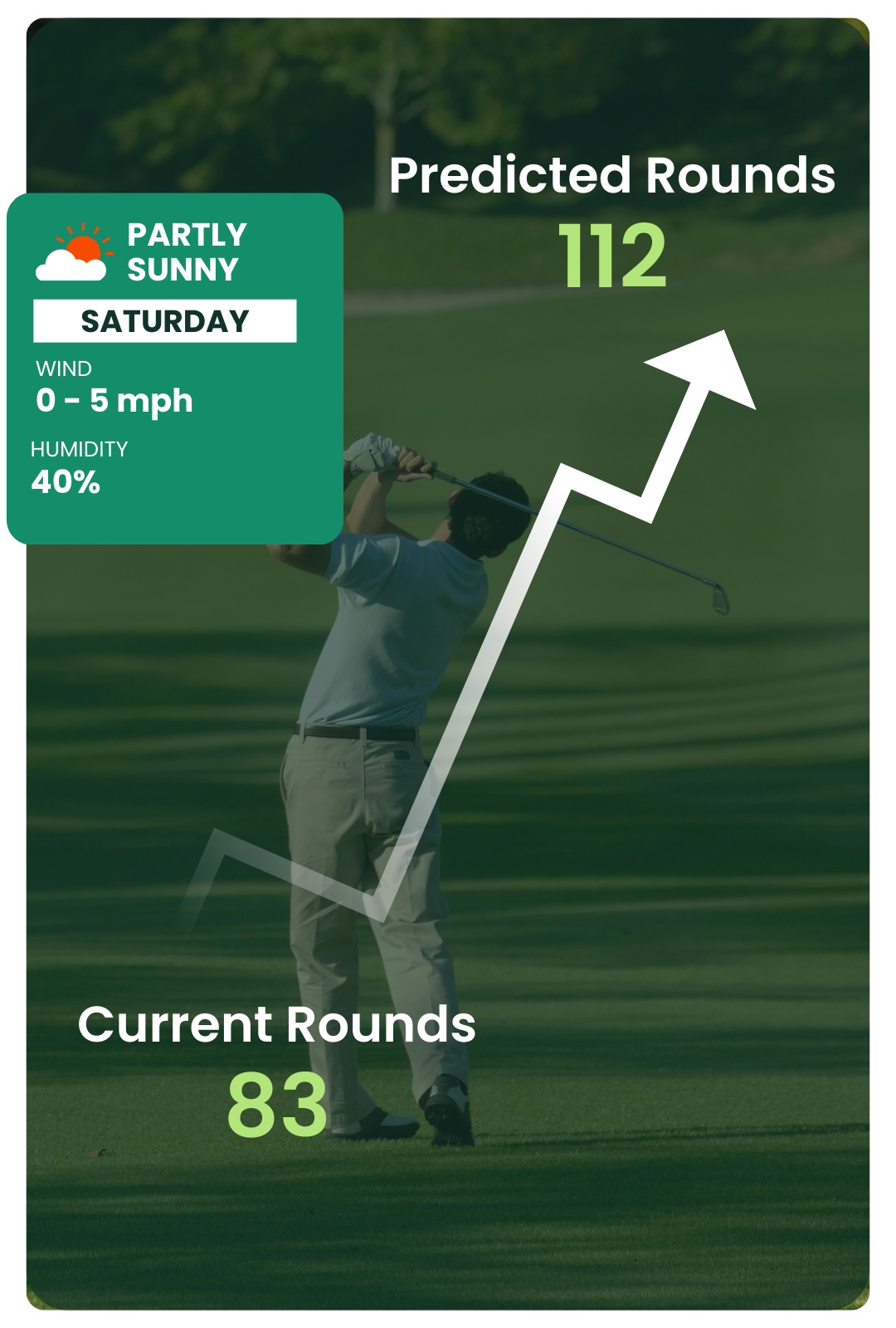
Predictive pricing systems analyze historical booking curves and demand patterns to forecast demand before tee times fill, allowing prices to be optimized earlier.
The Role of Pricing Intelligence
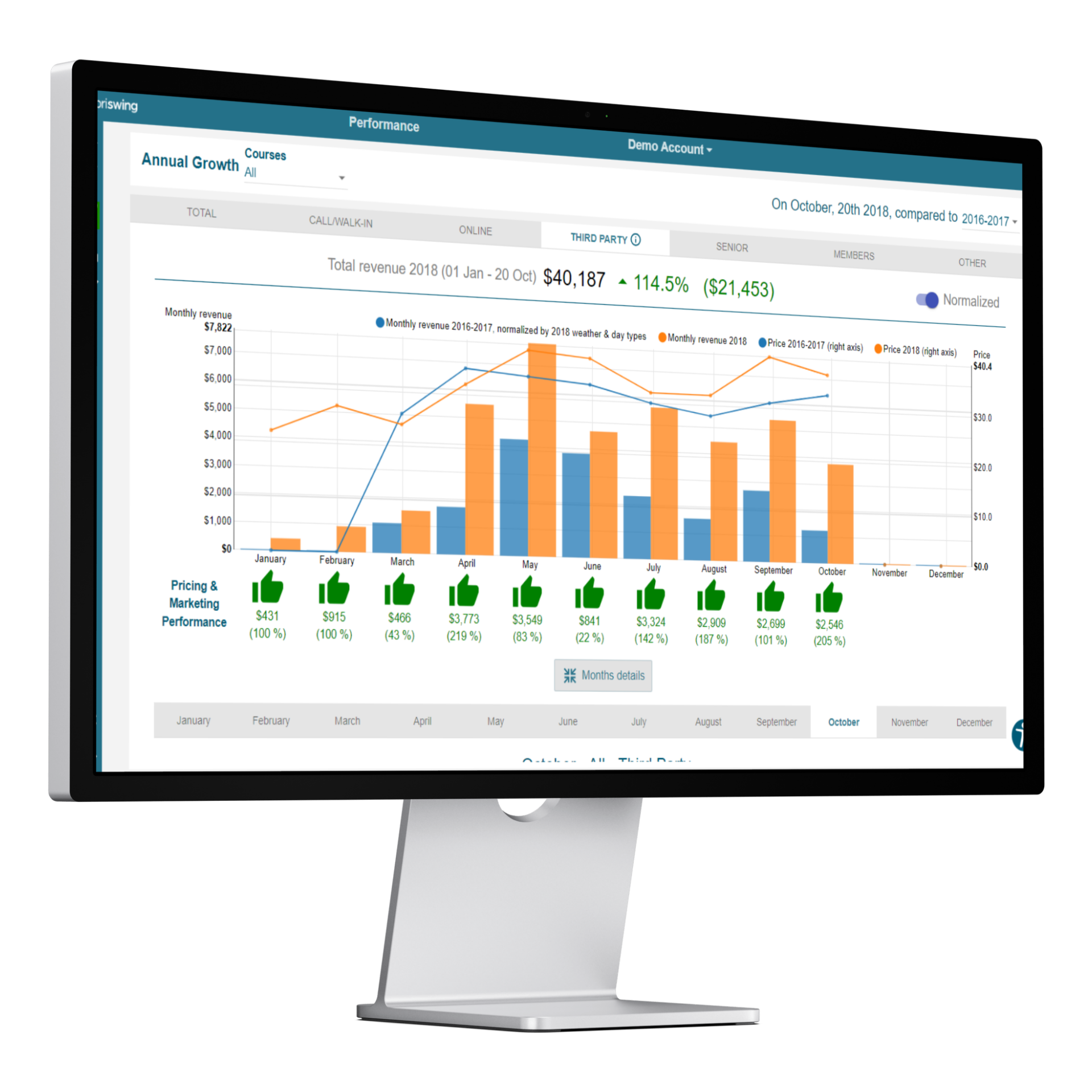
Modern golf pricing platforms analyze data from the tee sheet to forecast demand and optimize pricing automatically so operators can:
Capture more value during peak demand
Encourage bookings during slower periods
Understand long-term pricing trends
See Predictive Pricing in Action
Platforms like Priswing provide predictive pricing and revenue analytics designed specifically for golf courses.
By integrating directly with tee sheet software, operators can apply dynamic pricing without changing their existing systems.
